How the largest and most sustained shock to the world economy in the last century spelt the end for the gold standard

For the bulk of the mid to late 1920s, optimism was the prevailing mood amongst American investors. National income grew by 42%. American markets such as the Dow Jones had been in a six year long bull run since 1923. Living standards were rising, and a full economic recovery from the Great war and Spanish flu seemed to have materialised. The ‘roaring twenties’ are remembered in popular memory as an era of exciting cultural development, social change, and consumer confidence.
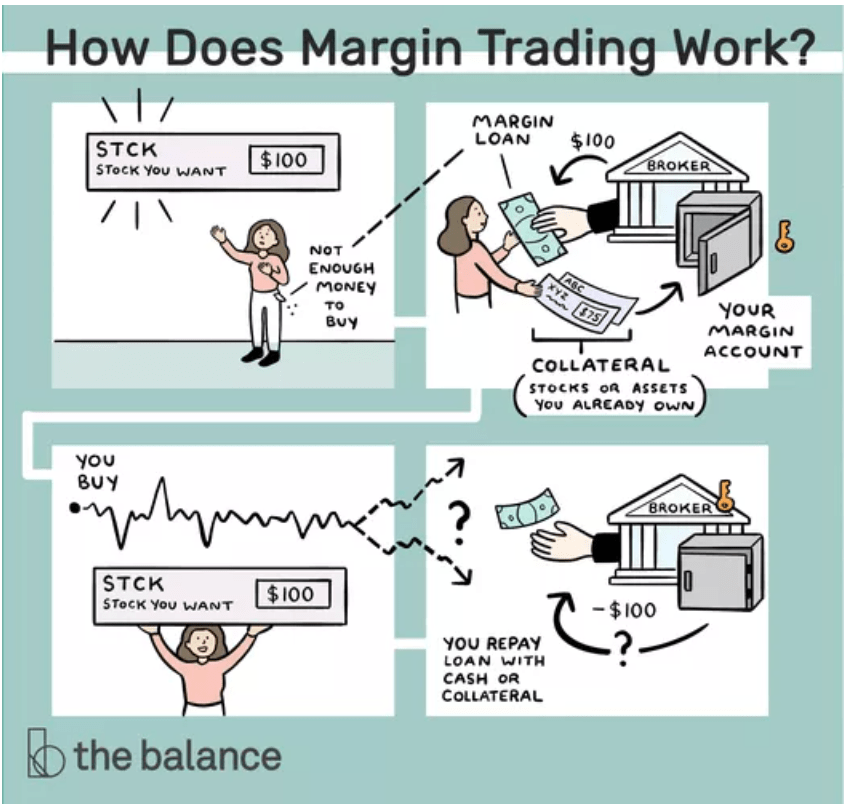
However, the American economic boom of the 1920s was built on shaky foundations. Consumers relied on debt to fuel speculation, as stockbrokers lent aspiring investors capital to buy significantly more stock than they could afford, in a practice known as margin trading. During the 1920s, it was common for stockbrokers to require little to no collateral when offering financing to investors. This practice left not only the debtor at risk of insolvency should their assets fail to perform as well as expected, but also left the assets of stockbrokers at risk.
Important note: it would be an oversimplification to state that a debt-fuelled investment bubble was the sole reason for the events of October 1929, and the years which followed – many other factors were also at play, such as an increase in interest rates by the Federal Reserve in August 1929 and a mild recession. Examining them all and how they came to be easily merits a post in its’ own right. But for the purposes of this post, we can assume that debt-fuelled speculation was the largest single factor for the events which followed.
Unsustainable speculation practices may have created a temporary boom, but as soon as investor confidence began to waver, the risk of investments losing value (and investors subsequently being unable to repay their debts) incentivised mass sell-offs, as people scrambled to recover some value from their investments before values depreciated even further. That’s exactly what happened on October 24th, known as ‘Black Thursday’, when a gradual decline in stock prices over the preceding few months intensified, as panic spread throughout Wall Street. Sell-offs were so extreme that the ticker-tape machines then in use to communicate prices were not able to keep up with trading – major banks had no idea what level stocks were actually trading at!
The crash of stock values is best illustrated by the Dow Jones Industrial Average falling by 11% on Black Thursday alone, followed by a 22.6% fall the following Monday, and 12.8% the day afterwards. The debt-fuelled nature of speculation meant that scores of hapless investors and stockbrokers lost practically all their assets overnight, the market crash costing them everything. This chaos spilled over into banks: their faith in the financial system shaken, panicked clients queued outside major financial institutions, desperate to withdraw their money.
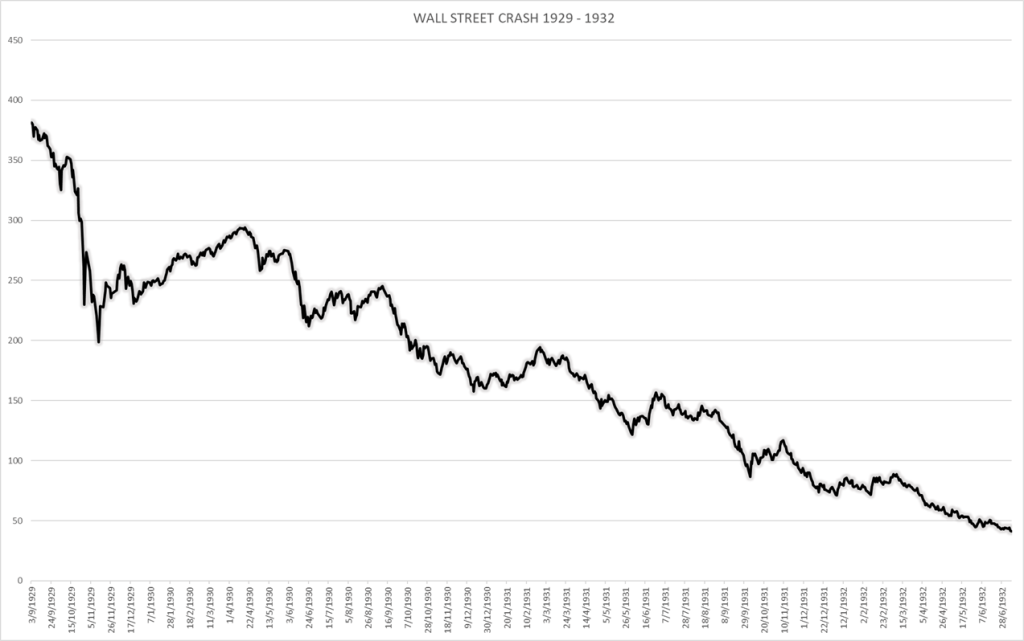
The run on banks had a serious impact on the economy as a whole: large numbers of banks could not handle the pressures: An estimated 9,000 banks went out of business in the years that followed, known as the Great Depression. The meltdown of the national financial system crushed consumer confidence, and forced businesses to initiate mass layoffs. Between 1929 and 1932, industrial output fell by 45%, and median household income by over 40%. It was a fall in living standards almost unimaginable by 21st-century standards.
The fiscal response of the Federal Reserve and the American government to the Great Depression was constrained by the gold standard. A holdover from the days when currencies derived their value from the metals which they were made from, adherence to the gold standard meant that holders of American currency had the right to exchange dollars for gold at a fixed rate. Whilst this helped to ensure some level of price stability, and maintained confidence in the dollar, it had major drawbacks. When a currency is exchangeable for gold at a fixed rate, the supply of money is directly tied to the (relatively static) supply of gold. As such, governments and central banks found themselves constrained by the gold standard – It was not possible for additional capital to be injected into the economy on-demand.
For this reason, during national crises – namely times of prolonged and intense war – nations were known to temporarily come off the gold standard in order to engage in large-scale deficit spending. A notable example was during the first world war: during the conflict, the Pound Sterling, German Mark, French Franc, along with the currencies of virtually all other major combatants (with the notable exception of the United States) suspended convertibility of their currencies into gold, or significantly limited it, in order to increase the amount of money that could be injected into the system without needing to increase gold supplies. This allowed the war to be fought, however the scale and duration of deficit spending led to serious inflation in all combatant nations during and immediately after the war.
In the early 1930s, economic activity had slumped in almost all sectors. This contraction of the economy led to a contraction of government revenue. Combining this reduced government revenue with the inability to conduct deficit spending to fund jobs creation and poverty alleviation programs owing to the fiscal inflexibility of the gold standard, by 1932 it was clear that a limited money supply was crippling the American government and the Federal Reserve’s response to the great depression. Still, however, president Herbert Hoover tried to cling onto the Gold Standard. He feared inflationary pressures, worrying that, like the European nations during the war, abandoning the gold standard would fuel rising prices. Furthermore, he believed that confidence in the value of the dollar was inextricably linked to the gold standard – without it, he feared that dollars would lose value, not only on the domestic level, but also the international – Hoover desperately wanted the dollar to remain strong, as a symbol of American prestige.
However, things came to a head in the election of 1932. Herbert Hoover, a republican, was running against a Democrat challenger – an up and coming governor of New York by the name of Franklin Roosevelt. Hoover attempted to make the case to voters for continued fiscal conservatism, whilst Roosevelt called for a radical shift in economic policy. Hoover’s record did not do him any favours – American voters had lost confidence in his ability to manage the economy, as under him the economic situation had continued to deteriorate since 1929. Roosevelt won in a landslide.
Upon taking office in March 1933, Roosevelt acted quickly. He imposed a ban on gold exports, and ordered all holders of over $100 worth of gold to be turned in to the treasury at a fixed price. Further laws were passed in coming weeks, reducing the gold value of the dollar, nullifying prior agreements that creditors be paid in gold, and prohibiting banks from issuing gold in exchange for currency. These laws, along with legislation increasing the federal valuation of gold by almost 70%, had the cumulative effect of being the de facto end of the gold standard in America. Following Britain, which had abandoned the gold standard in 1931, and itself followed by France in 1936, the weakening of the US currency’s link to gold paved the way for significant public works programs, financial aid and other stimulus measures, as monetary policy could finally be properly loosened. Although the recovery from the trough of the depression in the United States was not completed until 1940, employment figures stabilised in 1932, and once again began to trend upwards. Gradually, consumer confidence returned, as Roosevelt’s package of economic relief and stimuli, collectively known as the “new deal” took effect.
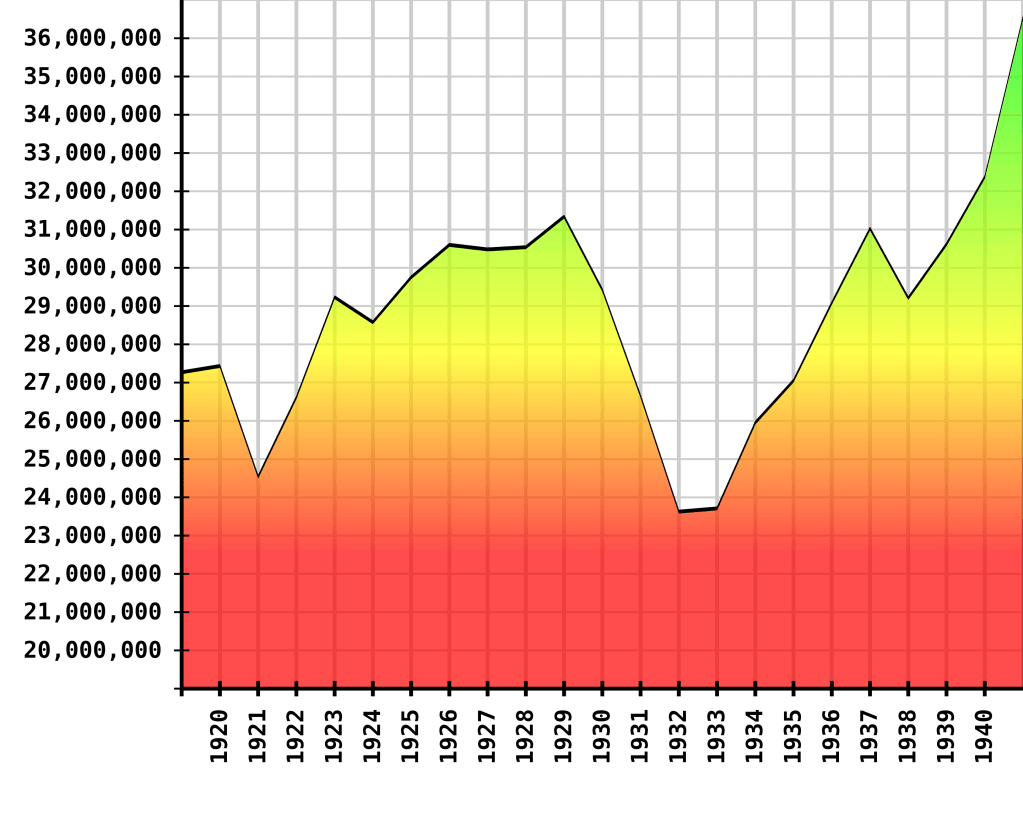
This was the death knell of the gold standard. Although in 1944, fixed convertibility of US dollars to gold was reintroduced as part of the Bretton Woods agreement, this was only permitted for foreign central banks, not American consumers or enterprises. The versatility of fiat currency, and the new-found flexibility that central banks had over monetary policy proved valuable tools in regulating or spurring economic growth. The Great Depression was the shock needed to force the global economy to cast aside its’ gold shackles, and go forwards into the greenback-paved future.
- Definitions:
- Bull run: A state of markets characterised by investor confidence: Generally, demand overall outweighs supply, leading to rising prices. This is why investors looking to purchase shares, or buy more assets are often described as ‘bullish’. The opposite of this is a ‘bear market’, where there are more sellers than buyers in a market, driving down prices
- Speculation: Purchasing assets, like stocks or property, hoping to capitalise off of short-term increases in value, and then selling to realise gains (Or, it could involve shorting assets, hoping to capitalise off of short-term declines in value)
- Shorting: This is when an trader borrows shares in a company, and then sells them for their market value. The trader then hopes that the value of the shares will decline. That way, when the trader needs to return the same number of borrowed shares, they hope that they can purchase the shares at a now lower market price, and return those shares, realising gains. For example: I could borrow a £20 share in company X, and be required to return it in a month. I can then sell the share for £20, and if the value of the company depreciates to £10 over the next month, I can purchase a £10 share and return that. The profit realised would be £10. However, this is risky: If company X performs better than expected, its’ share price might increase to £30, £40, or more! This is why short selling, or ‘shorting’ is not for the faint-hearted: There is theoretically no limit on the losses you could incur from having to rebuy shares at higher market rates.
- Margin trading: Borrowing money, providing some collateral to secure the loan, and then using borrowed money to make much larger purchases of assets than you otherwise would have, aiming to use profits made from investments to pay off the original loan. However, if your investments depreciate in value, you must still repay the loan.
- Collateral: Assets that you offer when applying for a large loan. In the event of you being unable to repay your loan, you forfeit your collateral to the lender. For example, when applying for a mortgage, your collateral is the property itself – in the event of you defaulting, you forfeit the property to the mortgage provider.
- Deficit spending: When a nation, organisation, or even a household spends more money than it raises in revenue. For example, the United States as of 22 recorded government spending of $6.27 trillion and total revenue of $4.90 trillion. The American deficit was therefore $1.38 trillion]
- Fiat currency: Government-issued currency that is not backed by commodities like gold or silver.
Thank you so much for reading through! I hope you found this article informative. I appreciate any and all feedback, constructive criticism, and advice, so if you have ideas for future posts, or you think I could have done something better when writing this article, don’t hesitate to leave a comment! -Alex


 On the money
Leave a comment