At its’ heart, what is economics? there’s a number of possible definitions: The science of scarcity is a pithy way of putting it, The science of the distribution of goods and services a more verbose one. But, in essence, economics is a tool, one that can be wielded by economists and policymakers to maximise wellbeing. People want to be happy, and to maximise their happiness, they require fulfilment of their material, intellectual and ethical desires. The discipline of economics can be used to balance the competing demands of all of these, in an attempt to make society as a whole happier, healthier and more developed for generations to come.
However, this begs the question: how can we maximise the happiness of society as a whole, when the concept of ‘being happy’ means different things to different people? Is the answer always for them to make decisions which maximise their individual likely economic success? There will ultimately be conflicts between what economists deem to be ‘rational’ behaviours that are in the best interests of people, and what people think is best for themselves. One (simplistic) example is as follows:
- A new asset has just come for sale on the market. If purchased, the asset has a 40% chance of tripling the money put into it in a 1-year timeframe, but it also has a 60% chance of losing all its’ value.
- On average, if the asset is purchased, a buyer can expect its’ value to increase to 1.2 times its’ value – an impressive annual return. And yet, very few consumers are likely to invest a significant sum into this asset. The reason? the perceived risk of losing wealth is much less attractive than any potential gains – the average consumer is loss averse
This, or some variation of it, can be seen in many real-world examples. The insurance industry, for one, is built off of the loss-averse tendencies of consumers1 – on average, you expect to pay the insurance company more in premiums than you will receive from them in compensation – the cost of risk mitigation is greater than the likely cost of risks itself.
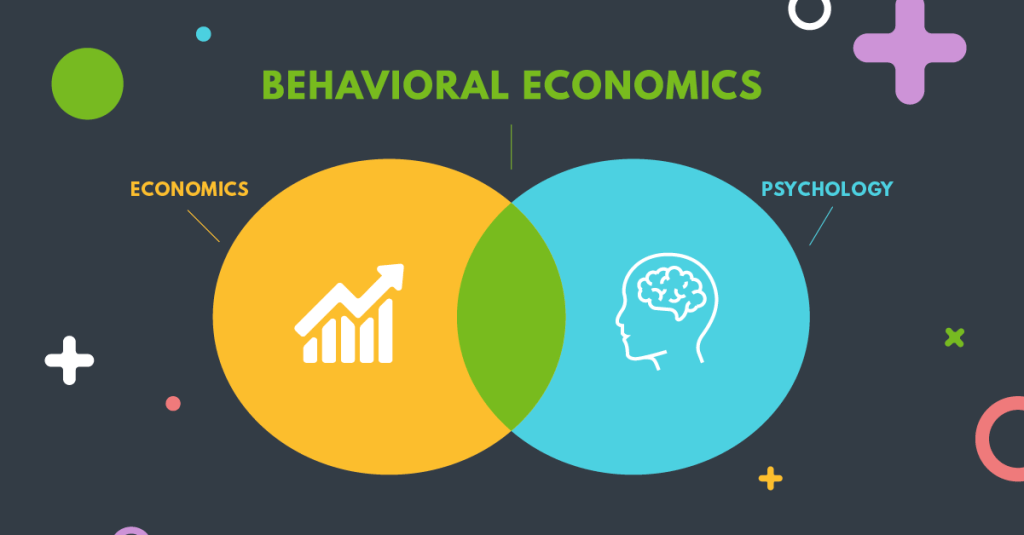
This is one small foray into the vast field known as ‘behavioural economics’ – the attempt by economists and psychologists to identify patterns of behaviour that don’t “align” with market expectations – that is, trends where people don’t seem to maximise their expected gain, and instead take sub-optimal courses of action. The underlying reasons behind this would at first appear to be quite simple – The human brain evolved to ensure the survival of the individual in a hostile, animalistic environment where the priorities were to hunt and gather, not to make complex investment decisions over multi-year timeframes, wasn’t it? If so, then how could we possibly be surprised that it doesn’t always make the ‘most optimal decision’, when in fact, it’s nothing short of miraculous that we can make any form of rational decision at all!
Owing to this, many textbooks2 and economics lectures will ascribe this ‘loss aversion’ as fundamentally irrational behaviour, unjustifiable by any sane person. However, the truth is often more nuanced. Take the example of the ‘risky asset’ mentioned earlier, with high potential returns but risks to capital. If I were a young, single person, with a steady income stream guaranteed for the foreseeable future and no dependents that could be harmed by poor finances, I would be quite likely to pour my savings into this asset in the hopes of a quick return – Even if things don’t pan out, I’d be in a good position to take the hit to my finances, and if I did indeed get my large return, I would be in a strong position to reinvest the gains to maximise my long-term wealth, or to spend with abandon to improve my short-term happiness.
Now, let’s contrast this young risk-taker with a typical homeowner in their late 60s. Asset-rich and income-poor, this person would be much less likely to buy heavily into this new asset – living off of their savings and pension pot, should their investment not pan out, they would stand to lose a great deal more than the young worker – a significant hit to their finances would need them to alter their lifestyle, cutting back on the pleasures of retirement in order to stretch their remaining savings. And even if the investment did give its’ returns, it would mean a lot less to them – should they reinvest their money, their investment timeframe is so much shorter than someone in their twenties that the long-term gain would also be significantly less.
The rationale would differ once again for, say, parents with a pair of young children. The utmost priority of parents would almost certainly be the upbringing of their children to a certain standard, and preparedness in the event of any expenses, be they planned (such as family holidays and university tuition), or unplanned (such as emergency trips to the dentist, or skipping work to look after sick children). For such parents, the risks of a failed investment are multiplied – it’s not only their own futures that they have to consider, but those of their children too, whilst the benefits of the return on investment would not shift accordingly. Therefore, the parents would be less likely than a single young worker to make a risky investment, whilst likely being marginally more likely than a financially independent retiree.
Suddenly, what at first appeared to be humans reacting irrationally and choosing a sub-optimal path when a superior one is obvious with a moments’ thought has transformed – it’s transformed from being one set of circumstances to dozens, depending on individual incomes, ages, numbers of dependents, wealth, and still more. I’m not denying that some people act against their own interests – the mere existence of organisations like gambler’s anonymous serves as a sober reminder that all too often, people make irrational decisions on a scale that seriously impacts their long-term futures. But what I am instead trying to say is that instead of waving away what might seem to be ‘irrational’ decisions, we must first acknowledge that they may in fact be all too rational – for some people, the risk of losing a sum of money really does outweigh the potential benefit of gaining a far greater sum, when their families, retirement, or lifestyle is on the line. Instead of dismissing ‘loss aversion’ as a silly quirk, perhaps we would do better to acknowledge it for what it is: in many cases a fundamentally rational effort towards self-preservation.
In behavioural economics as a whole, instead of dismissing various human quirks as ‘sub-optimal’, we should acknowledge the existence of the most common socioeconomic situations that individuals are likely to be in, and accept that their rational cost-benefit analyses results in the greatest benefit to them in terms of happiness, if not necessarily in terms of money – perhaps the greatest danger we face is forgetting that the pursuit of material wealth is merely a means to an end, rather than an end in itself.
Thank you so much for reading through! I hope you found this article informative, or at the very least, thought-provoking. As you’ve probably guessed, I’m no expert in the field of behavioural economics, and all opinions expressed in this article are entirely my own, and are certainly open to revision as I learn more about the field. As usual, I appreciate any and all feedback, constructive criticism, and advice, so if you have ideas for future posts, or you think I could have done something better when writing this article, don’t hesitate to leave a comment! -Alex
- This is, however, excluding those insurance firms which are able to negotiate hefty discounts with providers on behalf of clients, such as American Health Insurance firms, or insurance which is mandated by law, not voluntarily purchased by consumers, such as car insurance ↩︎
- The A-level ones, at any rate. ↩︎
 On the money
Leave a comment